
General Dentistry
Keeping Your Family Healthy
Nothing beats the basics of regular dental visits. We detect problems early rather than late, so we can easily treat small issues before they grow into big ones. We help you and your family keep healthy smiles that last a lifetime.
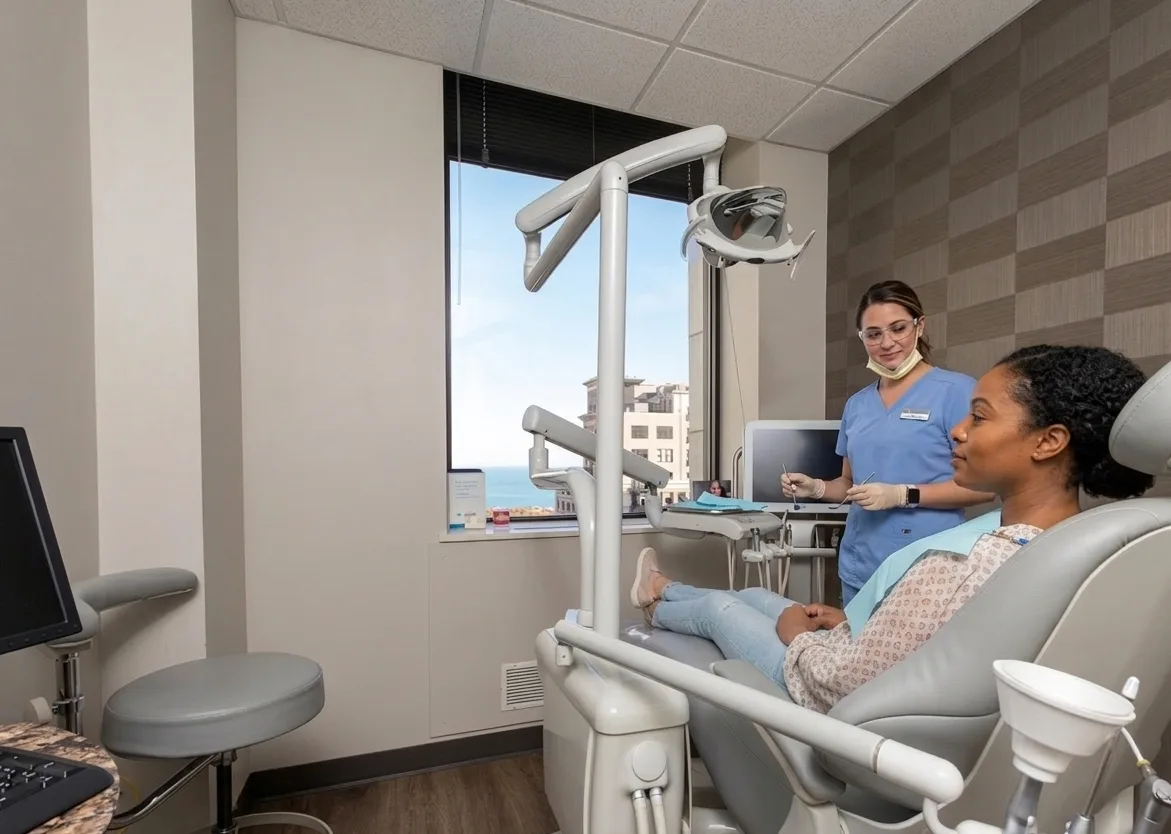
Preventive Care That Keeps You Healthy
Dental technology goes far in helping us maintain your oral health, but nothing beats the basics — regular cleanings, examinations, and X-rays. We detect problems early so we can treat small issues before they become big ones.
At Millennium Park Smiles, we help you and your family keep healthy smiles that last a lifetime. All of our dental hygienists and dentists are trained in the latest preventive techniques and screening methods.
Cleanings & Exams
Regular professional cleanings remove plaque, tartar, and bacteria buildup that you can't efficiently clean yourself at home. The ADA recommends annual dental exams and cleanings, with more frequent visits for patients with periodontal disease, chronic conditions, or smoking habits.
- Professional plaque and tartar removal
- Comprehensive oral examination
- Early problem detection
- Personalized care recommendations
3D X-Rays & CBCT Imaging
Our cone-beam computed tomography (CBCT) technology creates digital 3D images of your mouth and skull in approximately ten seconds. Unlike traditional 2D X-rays, 3D scans can identify problems that flat images simply cannot, with up to 98.5% less radiation than medical CT scans.
- 3D images reveal what 2D X-rays miss
- Up to 98.5% less radiation than medical CT
- Approximately 10-second scan time
- In-house equipment eliminates third-party costs
Dental Fillings
Most people need at least one tooth filling in their lifetime. We use fillings to treat cavities, repair cracked or broken teeth, and restore teeth worn down over time. The procedure includes topical anesthetic, decay removal, and restoration with composite or amalgam materials.
- Topical anesthetic for comfort
- Tooth-colored composite options
- Mercury-free materials available
- Bite check for comfortable alignment
Oral Cancer Screening
All of our dental hygienists and dentists are trained to perform thorough oral cancer screenings. The screening includes examination of gums, cheeks, tongue, floor and roof of mouth, lymph nodes, lips, salivary glands, and jaw joint area.
- Thorough visual and physical examination
- Oral ID screening technology
- Performed at every six-month checkup
- All staff trained in detection
iTero Digital Impressions
iTero full-mouth scans provide a complete digital picture of your dental health — like a body scan for your mouth. You can see your progress over time, and the digital impressions eliminate the need for uncomfortable bite-down molds.
- No uncomfortable dental molds
- Track progress over time
- Precise digital measurements
- Faster, more comfortable process
Reconstructive Dentistry
Missing teeth can cause embarrassment, chewing difficulties, and further tooth loss as remaining teeth shift. We offer dental implants, bridges, dentures, and mini implant dentures to restore natural form and function.
- Dental implants for permanent replacement
- Bridges and dentures options
- Full-mouth rehabilitation
- Restores form and function
Explore More Services
Frequently Asked Questions
- How often should I visit the dentist?
- The ADA recommends annual dental exams and cleanings. Patients with periodontal disease, chronic conditions, or smoking habits may benefit from more frequent visits.
- How often should I floss?
- Flossing once per day helps prevent cavities from forming between the teeth where your toothbrush can't reach. Flossing also helps keep your gums healthy.
- What kind of toothbrush should I use?
- A soft toothbrush with a small head is recommended. Medium and hard brushes tend to cause irritation and contribute to recession of the gums. The brand is less important than the bristle type and head size.
- Is one brand of toothpaste better than another?
- Generally, no. However, it's advisable to use a fluoride-containing toothpaste to decrease the incidence of dental decay. We recommend using what tastes good to you as long as it contains fluoride.
- What is a CBCT 3D X-ray?
- Cone-beam computed tomography (CBCT) creates digital 3D images of your mouth and skull in approximately ten seconds. Unlike traditional 2D X-rays, 3D scans can identify problems that flat images cannot, with up to 98.5% less radiation than medical CT scans.
Due for a Checkup?
Regular dental visits are the foundation of a healthy smile. Schedule yours today.